At SOA Farms, we believe that limited space should not prevent people from growing fresh food. We are rethinking urban agriculture by developing practical, space-efficient growing systems that help people produce vegetables in urban environments while making more efficient use of water and other resources.
Our journey began with a simple question: How can young people grow more food when land and water are limited?
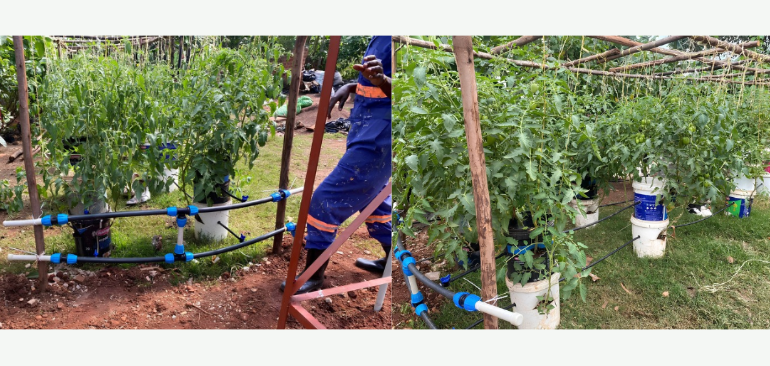
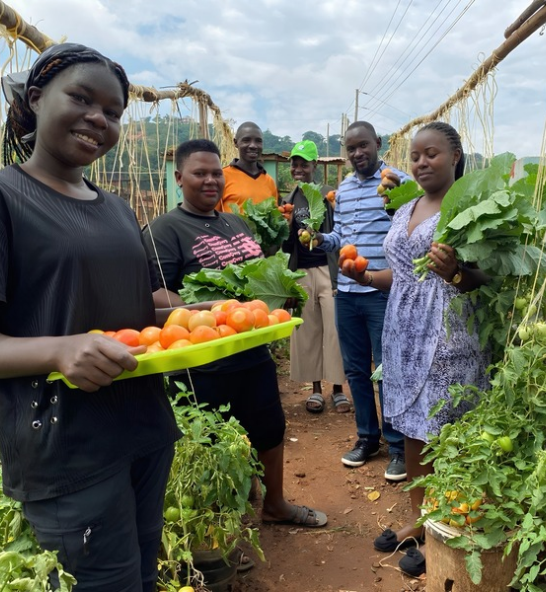
In response, we began developing locally fabricated vertical growing systems using repurposed materials, organic growing inputs and gravity-fed drip irrigation. Our initial work has focused on tomato production, helping us test our approach, learn from real growing conditions and improve our system.
Today, we are building toward a future where young farmers, households and community groups can access the tools, knowledge and support they need to participate in urban food production.
We are developing a growing system and practical support to help more urban growers participate in vegetable production.

We believe productive urban agriculture can begin with the space people already have.
Our approach explores how vertical growing systems can make vegetable production more accessible where land is limited.

We are developing practical growing solutions that make better use of available space
and encourage more efficient water use, helping urban farmers explore alternatives to conventional growing methods.
 Small spaces, greater growing potential.Practical innovation for urban agriculture.More efficient use of natural resources.
Youth participation in sustainable food systems.
SOA Farms began with a simple question:
How can we help people grow more food sustainably
when land and water are limited?
We began exploring how vertical farming and repurposed materials could help people in Kampala's underserved communities grow vegetables despite limited space and resources.
We built our first vertical growing towers and tested them with vegetables. Early challenges with watering and stability helped us identify what needed to improve.
Joining the beVisioneers: The Mercedes-Benz Fellowship marked an important step in SOA Farms' journey. Through learning, coaching and mentorship, we continued strengthening our approach to climate-smart urban agriculture, refining our solution and exploring how to create lasting environmental and community impact.
We are working toward a broader urban farming ecosystem that combines growing kits, practical training, locally appropriate inputs and networks of young farmers to support more resource-efficient food production.
Our vision is to help make growing fresh food more accessible, strengthen urban food systems and create opportunities for the next generation of urban farmers.

Urban communities face growing challenges in producing fresh food, including limited land, unreliable water access and changing weather conditions. These barriers can make vegetable production particularly difficult for young people who want to farm but lack access to conventional farmland.
SOA Farms is exploring a practical alternative through space-efficient vertical growing systems designed for urban environments.
Our current prototype work focuses on tomatoes, while our broader ambition is to make space-efficient vegetable production accessible to more urban growers.
Our mission To empower young people and urban communities to participate in vegetable production through practical vertical growing systems, resource-efficient technologies and hands-on learning.
We envision cities where people can grow fresh food in limited spaces, use resources more efficiently and access new opportunities through urban agriculture.
SOA Farms aims to make urban agriculture more accessible by combining innovative growing systems, practical education and connected communities of growers.
We see a future where underused urban spaces become productive growing areas, water and other resources are used more efficiently, and young people have greater opportunities to build skills and sustainable livelihoods through agriculture.
By bringing together technology, knowledge and community, we are working toward greener cities, more resilient food systems and a future in which growing food is a more accessible part of everyday urban life.
Little gardens, big impact.Smarter growingSmall spaces, big harvestsStronger urban food systems.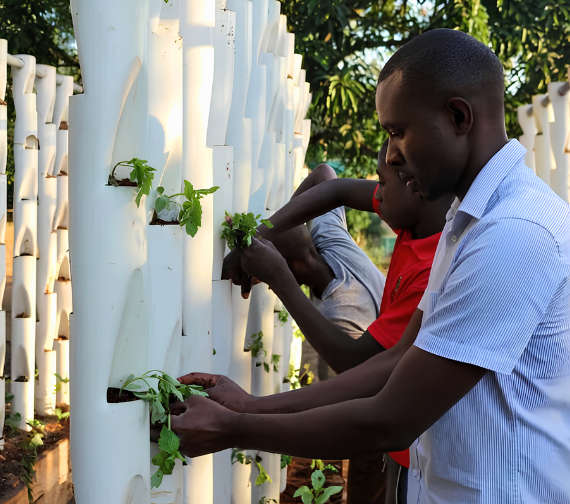
We bring together innovation, agricultural knowledge
and community engagement to develop practical
growing solutions for urban environments.
Our work is driven by the belief that limited space
should not prevent young people from participating
in vegetable production.


Grow More. Use Less.
SOA Farms develops practical vertical growing systems that help young urban farmers explore vegetable production in limited spaces through space-efficient growing technology, water-conscious irrigation and hands-on learning.
We aim to strengthen urban food production, create livelihood opportunities and build more resilient local food systems.